
Physics
A deeper level of understanding
All our content is directly connected to subjects from the NSW Board of Studies. We begin by explaining the concepts, then we proceed to simpler questions and eventually tackle questions similar to those in exams.
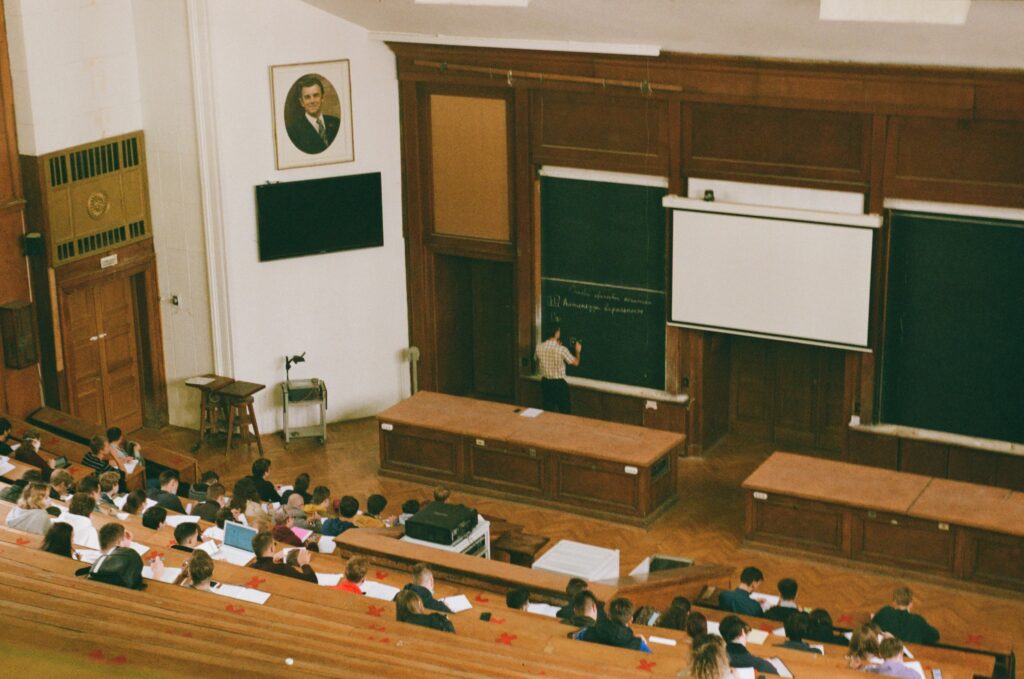
A fun learning environment
Our lessons are both enjoyable and interactive. We encourage group discussions, and students are welcome to ask as many questions as they wish!
What Will You Get?
Personalised Homework Questions
At LOGOS Academia, we make homework personal. We customise assignments to target each student's weak spots. Weekly, they get a special booklet full of practice questions meant to tackle their unique challenges head-on.
Answer Books
We start preparing you as early as Year 6 to structure your mathematical explanations. Just like organising paragraphs and sentences in English, we teach students to logically present their work in math using our effective answer book system!
Our Proven Lessons Breakdown
30 MIN
We go through any homework related issues, and ensure all students are comfortable.
1HR 30 MIN
We teach new material, developing theory, and slowing move up in difficulty until we are answering exam-style questions.
Subject Details
- Year 11
- Year 12
- Module 1
- Module 2
- Module 3
- Module 4
Kinematics
Topic 1
Motion in a Straight Line
- describe uniform straight-line (rectilinear) motion and uniformly accelerated motion
- conduct a practical investigation to gather data to facilitate the analysis of instantaneous and average velocity
- calculate the relative velocity of two objects moving along the same line using vector analysis
- conduct practical investigations, selecting from a range of technologies, to record and analyse the motion of objects in a variety of situations in one dimension in order to measure or calculate
- use mathematical modelling and graphs, selected from a range of technologies, to analyse and derive relationships between time, distance, displacement, speed, velocity and acceleration in rectilinear motion
Topic 2
Motion on a Plane
- analyse vectors in one and two dimensions
- represent the distance and displacement of objects moving on a horizontal plane
- describe and analyse algebraically, graphically and with vector diagrams, the ways in which the motion of objects changes
- describe and analyse, using vector analysis, the relative positions and motions of one object relative to another object on a plane
- analyse the relative motion of objects in two dimensions in a variety of situations
Dynamics
Topic 1
Forces
- using Newton’s Laws of Motion, describe static and dynamic interactions between two or more objects and the changes
- explore the concept of net force and equilibrium in one-dimensional and simple two-dimensional contexts
- solve problems or make quantitative predictions about resultant and component forces
- conduct a practical investigation to explain and predict the motion of objects on inclined planes
Topic 2
Forces, Acceleration and Energy
- apply Newton’s first two laws of motion to a variety of everyday situations, including both static and dynamic examples, and include the role played by friction f⃗ friction=μF⃗ N
- investigate, describe and analyse the acceleration of a single object subjected to a constant net force and relate the motion of the object to Newton’s Second Law of Motion
- apply the special case of conservation of mechanical energy to the quantitative analysis of motion involving
- conduct investigations over a range of mechanical processes to analyse qualitatively and quantitatively the concept of average power P=ΔEΔt , P=F∥v=Fvcosθ
Topic 3
Momentum, Energy and Simple Systems
- conduct an investigation to describe and analyse one-dimensional (collinear) and two-dimensional interactions of objects in simple closed systems
- analyse qualitatively and predict, using the law of conservation of momentum ∑mv⃗ before=∑mv⃗ after and, where appropriate, conservation of kinetic energy ∑12mv2before=∑12mv2after , the results of interactions in elastic collisions
- investigate the relationship and analyse information obtained from graphical representations of force as a function of time
- evaluate the effects of forces involved in collisions and other interactions, and analyse quantitatively the interactions using the concept of impulse Δp⃗ =F⃗ netΔt
- analyse and compare the momentum and kinetic energy of elastic and inelastic collisions
Waves and Thermodynamics
Topic 1
Wave Properties
- conduct a practical investigation involving the creation of mechanical waves in a variety of situations
- conduct practical investigations to explain and analyse the differences
- construct and/or interpret graphs of displacement as a function of time and as a function of position of transverse and longitudinal waves, and relate the features of those graphs
- solve problems and/or make predictions by modelling
Topic 2
Wave behaviour
- explain the behaviour of waves in a variety of situations by investigating the phenomena
- conduct an investigation to distinguish between progressive and standing waves
- conduct an investigation to explore resonance in mechanical systems and the relationships between:
Topic 3
Sound waves
- conduct a practical investigation to relate the pitch and loudness of a sound to its wave characteristics
- model the behaviour of sound in air as a longitudinal wave
- relate the displacement of air molecules to variations in pressure
- investigate quantitatively the relationship between distance and intensity of sound
- conduct investigations to analyse the reflection, diffraction, resonance and superposition of sound waves
- investigate and model the behaviour of standing waves on strings and/or in pipes to relate quantitatively the fundamental and harmonic frequencies of the waves that are produced to the physical characteristics (eg length, mass, tension, wave velocity) of the medium
- analyse qualitatively and quantitatively the relationships of the wave nature of sound
Topic 4
Ray model of light
- conduct a practical investigation to analyse the formation of images in mirrors and lenses via reflection and refraction using the ray model of light
- conduct investigations to examine qualitatively and quantitatively the refraction and total internal reflection of light
- predict quantitatively, using Snell’s Law, the refraction and total internal reflection of light in a variety of situations
- conduct a practical investigation to demonstrate and explain the phenomenon of the dispersion of light
- conduct an investigation to demonstrate the relationship between inverse square law, the intensity of light and the transfer of energy
- investigate aasolve problems or make quantitative predictions in a variety of situations by applying the following relationships to:nd model the behaviour of standing waves on strings and/or in pipes to relate quantitatively the fundamental and harmonic frequencies of the waves that are produced to the physical characteristics (eg length, mass, tension, wave velocity) of the medium
Topic 5
Thermodynamics
- explain the relationship between the temperature of an object and the kinetic energy of the particles within it
- explain the concept of thermal equilibrium
- analyse the relationship between the change in temperature of an object, and its specific heat capacity through the equation Q=mcΔT
- investigate energy transfer by the process
- conduct an investigation to analyse qualitatively and quantitatively the latent heat involved in a change of state
- model and predict quantitatively energy transfer from hot objects by the process of thermal conductivity
- apply the following relationships to solve problems and make quantitative predictions
Electricity and Magnetism
Topic 1
Electrostatics
- conduct investigations to describe and analyse qualitatively and quantitatively
- using the electric field lines representation, model qualitatively the direction and strength of electric fields
- apply the electric field model to account for and quantitatively analyse interactions between charged objects
- analyse the effects of a moving charge in an electric field, in order to relate potential energy, work and equipotential lines
Topic 2
Electric Circuits
- investigate the flow of electric current in metals and apply models to represent current
- investigate quantitatively the current–voltage relationships in ohmic and non-ohmic resistors to explore the usefulness and limitations of Ohm’s Law
- investigate quantitatively and analyse the rate of conversion of electrical energy in components of electric circuits, including the production of heat and light, by applying P=VI and E=Pt and variations that involve Ohm’s Law
- investigate qualitatively and quantitatively series and parallel circuits to relate the flow of current through the individual components, the potential differences across those components and the rate of energy conversion by the components to the laws of conservation of charge and energy, by deriving the following relationships
- investigate quantitatively the application of the law of conservation of energy to the heating effects of electric currents , including the application of P=VI and variations of this involving Ohm’s Law
Topic 3
Magnetism
- investigate and describe qualitatively the force produced between magnetised and magnetic materials in the context of ferromagnetic materials
- use magnetic field lines to model qualitatively the direction and strength of magnetic fields produced by magnets, current-carrying wires and solenoids and relate these fields to their effect on magnetic materials that are placed within them
- conduct investigations into and describe quantitatively the magnetic fields produced by wires and solenoids, including
- investigate and explain the process by which ferromagnetic materials become magnetised
- apply models to represent qualitatively and describe quantitatively the features of magnetic fields
- Module 5
- Module 6
- Module 7
- Module 8
Advanced Mechanics
Topic 1
Projectile Motion
- analyse the motion of projectiles by resolving the motion into horizontal and vertical components
- apply the modelling of projectile motion to quantitatively derive the relationships
- conduct a practical investigation to collect primary data in order to validate the relationships derived above.
- solve problems, create models and make quantitative predictions by applying the equations of motion relationships for uniformly accelerated and constant rectilinear motion
Topic 2
Circular Motion
- conduct investigations to explain and evaluate, for objects executing uniform circular motion, the relationships
- analyse the forces acting on an object executing uniform circular motion in a variety of situations
- solve problems, model and make quantitative predictions about objects executing uniform circular motion in a variety of situations
- investigate the relationship between the total energy and work done on an object executing uniform circular motion
- investigate the relationship between the rotation of mechanical systems and the applied torque τ=r⊥F=rFsinθ
Topic 3
Motion in Gravitational Fields
- apply qualitatively and quantitatively Newton's Law of Universal Gravitation
- investigate the orbital motion of planets and artificial satellites
- predict quantitatively the orbital properties of planets and satellites in a variety of situations, including near the Earth and geostationary orbits, and relate these to their uses
- investigate the relationship of Kepler’s Laws of Planetary Motion to the forces acting on, and the total energy of, planets in circular and non-circular orbits using
- derive quantitatively and apply the concepts of gravitational force and gravitational potential energy in radial gravitational fields to a variety of situations
Electromagnetism
Topic 1
Charged Particles, Conductors and Electric and Magnetic Fields
- investigate and quantitatively derive and analyse the interaction between charged particles and uniform electric fields
- model qualitatively and quantitatively the trajectories of charged particles in electric fields and compare them with the trajectories of projectiles in a gravitational field
- analyse the interaction between charged particles and uniform magnetic fields
- compare the interaction of charged particles moving in magnetic fields to:
Topic 2
The Motor Effect
- investigate qualitatively and quantitatively the interaction between a current-carrying conductor and a uniform magnetic field F=lI⊥B=lIBsinθ
- conduct a quantitative investigation to demonstrate the interaction between two parallel current-carrying wires
- analyse the interaction between two parallel current-carrying wires Fl=μ02πI1I2r and determine the relationship between the International System of Units (SI) definition of an ampere and Newton’s Third Law of Motion Information and communication technology capability
Topic 3
Electromagnetic Induction
- describe how magnetic flux can change, with reference to the relationship Φ=B∥A=BAcosθ
- analyse qualitatively and quantitatively, with reference to energy transfers and transformations, examples of Faraday’s Law and Lenz’s Law E=−NΔΦΔt , including but not limited to:(ACSPH081, ACSPH110)
- analyse quantitatively the operation of ideal transformers through the application of
- evaluate qualitatively the limitations of the ideal transformer model and the strategies used to improve transformer efficiency
- analyse applications of step-up and step-down transformers
Topic 4
Applications of the Motor Effect
- investigate the operation of a simple DC motor
- analyse the operation of simple DC and AC generators and AC induction motors
- relate Lenz’s Law to the law of conservation of energy and apply the law of conservation of energy
The Nature of Light
Topic 1
Electromagnetic Spectrum
- investigate Maxwell’s contribution to the classical theory of electromagnetism
- describe the production and propagation of electromagnetic waves and relate these processes qualitatively to the predictions made by Maxwell’s electromagnetic theory
- conduct investigations of historical and contemporary methods used to determine the speed of light and its current relationship to the measurement of time and distance
- conduct an investigation to examine a variety of spectra produced by discharge tubes, reflected sunlight or incandescent filaments
- investigate how spectroscopy can be used to provide information
- investigate how the spectra of stars
Topic 2
Wave Model
- conduct investigations to analyse qualitatively the diffraction of light
- conduct investigations to analyse quantitatively the interference of light using double slit apparatus and diffraction gratings dsinθ=mλ
- analyse the experimental evidence that supported the models of light that were proposed by Newton and Huygens
- conduct investigations quantitatively using the relationship of Malus’ Law I=Imaxcos2θ for plane polarisation of light, to evaluate the significance of polarisation in developing a model for light
Topic 3
Light: Quantum Model
- analyse the experimental evidence gathered about black body radiation, including Wien’s Law related to Planck's contribution to a changed model of light
- investigate the evidence from photoelectric effect investigations that demonstrated inconsistency with the wave model for light
- analyse the photoelectric effect Kmax=hf−ϕ as it occurs in metallic elements by applying the law of conservation of energy and the photon model of light
Topic 4
Light and Special Relativity
- analyse and evaluate the evidence confirming or denying Einstein’s two postulates
- investigate the evidence, from Einstein’s thought experiments and subsequent experimental validation, for time dilation t=t0(1−v2c2)−−−−−−−√ and length contraction l=l0(1−v2c2)−−−−−−−−√ , and analyse quantitatively situations in which these are observed
- describe the consequences and applications of relativistic momentum
- Use Einstein’s mass–energy equivalence relationship E=mc2 to calculate the energy released by processes in which mass is converted to energy
From the Universe to the Atom
Topic 1
Origins of the Elements
- investigate the processes that led to the transformation of radiation into matter that followed the ‘Big Bang’
- investigate the evidence that led to the discovery of the expansion of the Universe by Hubble
- analyse and apply Einstein’s description of the equivalence of energy and mass and relate this to the nuclear reactions that occur in stars
- account for the production of emission and absorption spectra and compare these with a continuous black body spectrum
- investigate the key features of stellar spectra and describe how these are used to classify stars
- investigate the Hertzsprung-Russell diagram and how it can be used to determine
- investigate the types of nucleosynthesis reactions involved in Main Sequence and Post-Main Sequence stars
Topic 2
Structure of the Atom
- investigate, assess and model the experimental evidence supporting the existence and properties of the electron
- investigate, assess and model the experimental evidence supporting the nuclear model of the atom
Topic 3
Quantum Mechanical Nature of the Atom
- assess the limitations of the Rutherford and Bohr atomic models
- investigate the line emission spectra to examine the Balmer series in hydrogen
- relate qualitatively and quantitatively the quantised energy levels of the hydrogen atom and the law of conservation of energy to the line emission spectrum of hydrogen
- investigate de Broglie’s matter waves, and the experimental evidence
- analyse the contribution of Schrödinger to the current model of the atom
Topic 4
Properties of the Nucleus
- analyse the spontaneous decay of unstable nuclei, and the properties of the alpha, beta and gamma radiation emitted
- examine the model of half-life in radioactive decay and make quantitative predictions about the activity or amount of a radioactive sample
- model and explain the process of nuclear fission, including the concepts of controlled and uncontrolled chain reactions, and account for the release of energy in the process
- analyse relationships that represent conservation of mass-energy in spontaneous and artificial nuclear transmutations, including alpha decay, beta decay, nuclear fission and nuclear fusion
- account for the release of energy in the process of nuclear fusion
- predict quantitatively the energy released in nuclear decays or transmutations, including nuclear fission and nuclear fusion
Topic 5
Deep inside the Atom
- analyse the evidence
- investigate the Standard Model of matter
- investigate the operation and role of particle accelerators in obtaining evidence that tests and/or validates aspects of theories, including the Standard Model of matter